Hydroxypropyl methylcellulose (HPMC), as one of the most crucial cellulose ethers in modern dry-mix mortar systems, plays an irreplaceable role in tile adhesives. With the increasing size of tiles, the complexity of construction environments, and the continuous improvement of bonding strength standards, the function of HPMC in the formulation becomes even more critical. Whether it’s C1/C2 type tile adhesives or high-performance adhesive systems for heavy tiles, large format tiles, and low-water-absorption tiles, HPMC plays a vital role in improving workability, enhancing durability, and increasing bonding strength.
1. Improving Water Retention to Ensure Sufficient Hydration
Tile adhesives are thin-layer mortars, with a typical thickness of 3–5 mm. They are highly susceptible to rapid water loss due to fast water absorption by the substrate, high ambient temperature, or drying by wind.
HPMC effectively locks in free water by forming a dense network structure in the mortar, significantly improving the water retention rate of the tile adhesive. Typically, high-quality HPMC can achieve a water retention rate of 90%–98%.
The effects of water retention include:
Slowing down the hydration rate of cement, improving bonding strength;
Preventing early water loss, cracking, and delamination;
Improving the adhesion stability of tile adhesives to low-water-absorption tiles (such as porcelain tiles and glazed tiles).
2. Improving Rheological Properties and Enhancing Workability
Workability is a crucial indicator of whether a tile adhesive will be accepted by construction teams. HPMC significantly improves the rheological properties of the mortar, giving the tile adhesive better spreadability and thixotropy.
The main manifestations of improved rheology:
Good thixotropy: Shear thinning, easy to spread; quick recovery after standing, no sagging.
Enhanced lubricity: Makes troweling easier, improving construction efficiency.
Improved paste uniformity and stability: Prevents mortar stratification, segregation, and bleeding.
For large-format tiles and high-load wall tile construction, the thixotropic properties of HPMC are particularly important, preventing tile slippage and improving anti-slip performance on vertical surfaces.
3. Improved Open Time and Adjustment Time
In modern tile adhesive construction, extending the open time improves tiling efficiency and reduces rework.
HPMC delays the evaporation of water from the mortar surface, keeping the mortar moist and giving workers more time to complete laying and adjustment.
Typical effects:
Open time can be extended to 20–30 minutes.
Increased adjustment time facilitates the positioning of large-format tiles.
HPMC is a key additive for C2 type high-performance tile adhesives that require a long open time.
4. Enhanced Bonding Strength and Structural Stability
HPMC is not a “binder” in the chemical sense, but it significantly improves the bonding strength of tile adhesives by improving the cement hydration process, optimizing the mortar structure, and increasing the density of the mortar.
Enhancements include:
Water retention promotes full hydration, thus forming more C-S-H gel products.
Refines the mortar structure and improves interfacial bonding ability.
Prevents interfacial voids and improves bonding quality and durability.
Its effect is particularly evident in the bonding of vitrified tiles and low-water-absorption tiles.
5. Improved Slip Resistance and Sag Resistance
Slip resistance during vertical tile installation is an important indicator for tile adhesives.
The high thixotropic properties of HPMC allow the tile adhesive to quickly regain structural strength after application, preventing tiles from sliding down due to their own weight.
Especially in the construction of large-format tiles and large-size glazed tiles, high-viscosity, appropriately substituted HPMC is crucial for slip resistance.
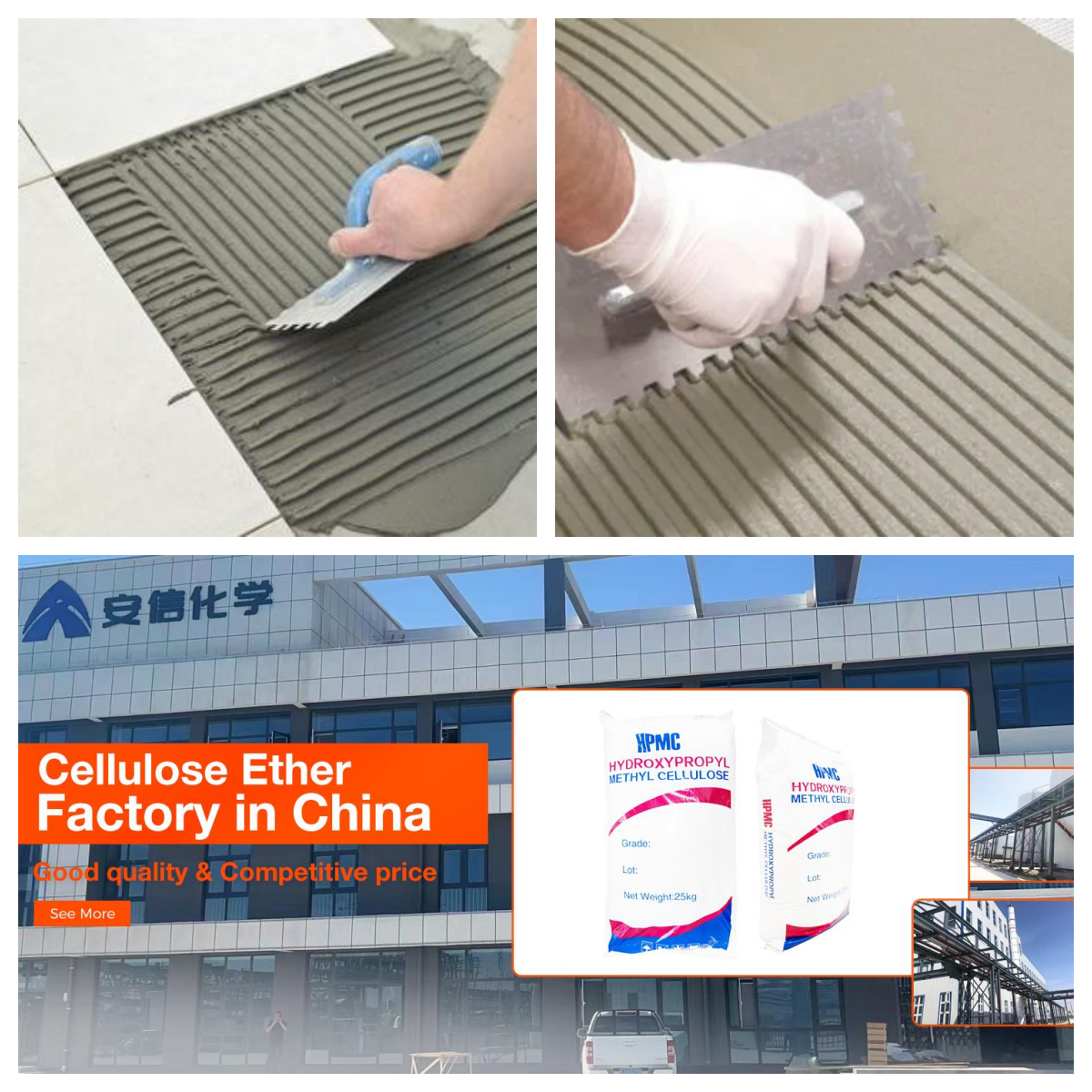
6. HPMC Dosage and Viscosity Selection Recommendations
In tile adhesive formulations, the amount of HPMC is generally low, but its impact is significant.
Common addition amount: 0.2%–0.4%
Specific amount depends on: cement type, filler ratio, construction environment, and tile size. Viscosity Recommendations (25°C, 2% solution):
Standard C1 type tile adhesive: 40,000–60,000 mPa·s
High-performance C2 type tile adhesive: 75,000–100,000 mPa·s or higher
Tile adhesive for large format tiles: ≥100,000 mPa·s, high thixotropic grade
HPMC, as a key functional material in tile adhesive systems, offers comprehensive technical advantages in improving water retention, rheology, bonding strength, and slip resistance. Whether for standard wall and floor tile installation or high-end large format tile application, the selection and application of high-quality HPMC is crucial for ensuring stable tile adhesive performance and reliable construction quality. For tile adhesive manufacturers pursuing high performance, choosing the appropriate HPMC grade is essential.
Post time: Dec-11-2025